Hospital discharge support.
Fast-track home assessments and adaptations that get patients out of hospital beds and safely home. Grab rails, ramps, beds downstairs, accessible bathrooms — installed at the pace a discharge plan needs.
Fast-track home assessments and adaptations that get patients out of hospital beds and safely home. Grab rails, ramps, beds downstairs, accessible bathrooms — installed at the pace a discharge plan needs.

Hospital beds blocked by patients waiting for unsafe homes to become safe is one of the most costly and avoidable problems in the system. The medical work is done. The discharge plan exists. The home isn’t ready.
Our hospital-discharge pathway closes that gap. We accept referrals from hospital discharge teams, community OTs, and ICB colleagues across the South West — and we move fast to enable a safe discharge home rather than to onward care.
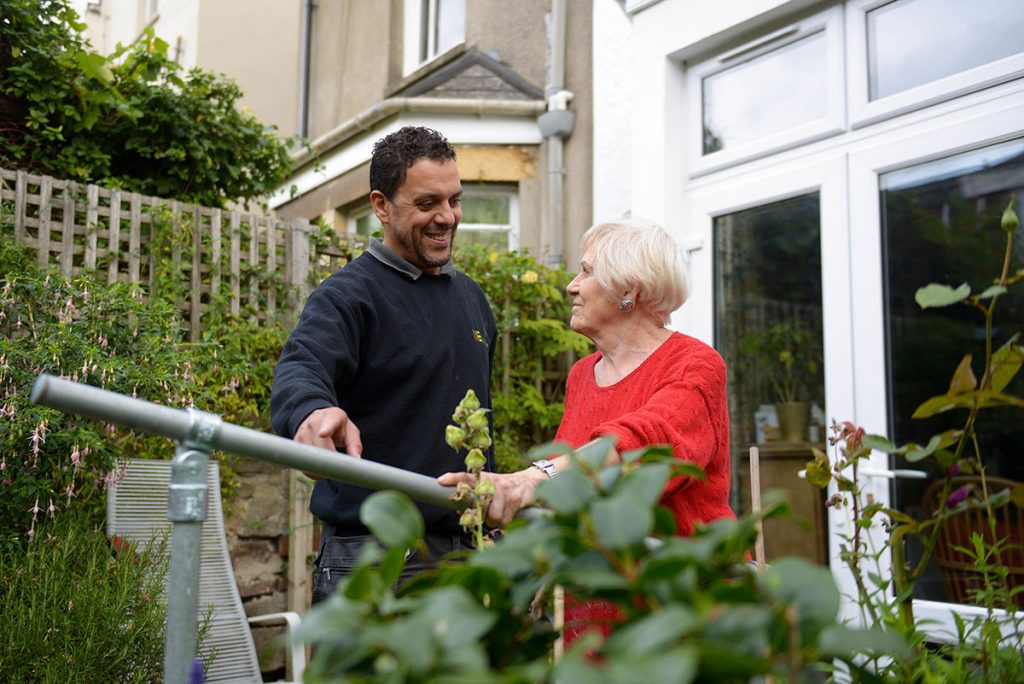
The fast-track pathway exists for time-critical cases — hospital beds emptied, patients discharged safely home, readmissions avoided. [TBC: confirm published partnership outcomes]
The pathway is built for time-critical cases. Referral acknowledged on receipt, home visit inside the agreed SLA, adaptation installed, discharge enabled — and a follow-up check after the patient is home.
A bed brought downstairs, a commode set up, grab rails near key transitions. Enables discharge home rather than to step-down care.
Walk-in shower or wet room conversion under fast-track funding, with grab rails and non-slip flooring.
Raised toilet seat, grab rails, sometimes a temporary equipment install with longer-term adaptation to follow.
Threshold or modular ramp installed at speed to enable the patient to physically get into the home.
Dementia-aware adaptations agreed with the family — clearer lighting, contrast on hazards, door alerts where helpful.
Working alongside the palliative team to get the home ready — bed access, accessible bathroom, room layout for carers.
For discharge co-ordinators, hospital OTs, and integrated care colleagues. For time-critical cases please also call 0300 323 0700.
If this is a same-day hospital discharge, please call us on 0300 323 0700 — we triage by phone.

[TBC: pull a real hospital discharge team quote — confirm before use.] When we know WECR are handling the home end, the discharge plan actually works. They respond fast, the work is right, and we don't get the patient back in A&E two weeks later.
If your question isn't here, contact us on 0300 323 0700.
If you’re a discharge lead, hospital OT, or ICB commissioner — we’d be glad to talk about how the pathway can work for your team.